Structural Drying in Indio, CA
Dry desert air dries the surface fast and leaves the slab, framing and wall cavities wet. The drying team runs equipment until readings, not appearances, say the structure is dry.
(888) 450-9281Get the drying started today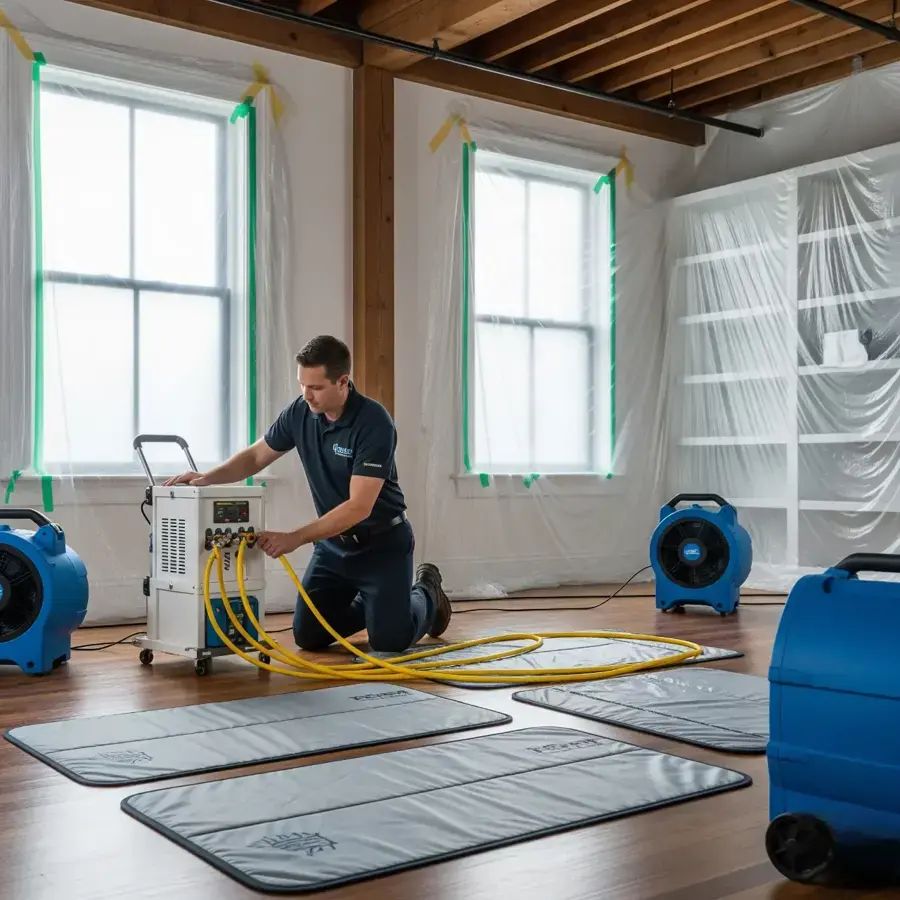
How structural drying is handled in Indio
Rapid local response
The restoration team works day and night across Indio and the Coachella Valley, and an active leak is treated as urgent.
IICRC S500 drying standard
Drying follows the industry standard: structural drying, not just surface drying, with the goal checked on a meter.
Claim-ready documentation
The moisture map, daily readings and timestamped photos go into a file an adjuster can work from.
Coachella Valley water experts
Attic AC overflows, heat-worn lines, monsoon runoff and slab homes are the daily work in this desert.
First steps for structural drying in Indio
- 1
Keep the AC on
Cooling and dehumidifying the house helps drying unless the AC was the leak.
- 2
Leave equipment running
Do not switch off air movers or dehumidifiers overnight.
- 3
Keep doors as set
The drying team sets doors open or closed on purpose.
- 4
Note any new damp spots
Tell the drying team about new stains or smells.
How Indio structural drying is handled
Measure first, remove the water, dry to the room's load, then prove it dry with readings.
- 1
Map the moisture
The tech who does the walkthrough maps moisture with thermal imaging and pinless meters before any equipment goes down.
- 2
Pull the water
The extraction crew removes standing water with truck-mounted extraction, so it leaves the building instead of spreading.
- 3
Set the drying
The drying team sizes air movers and LGR dehumidifiers to each room's evaporation load and runs them around the clock.
- 4
Read, log, verify
The team logs readings daily until wet materials sit within 2 to 4 points of a dry reference, and the log goes into the claim file.
What does structural drying cost in Indio, CA?
In Indio, CA, structural drying typically runs $900 to $6,000, depending on the number of rooms, the class of the loss, how many air movers and dehumidifiers are needed and how many days they run.
- Air movers and one LGR
- Daily readings
- Drying log
- Multiple LGR units
- Wall cavity drying
- Moisture map updates
- Desiccant dehumidifiers
- Drying mats for hardwood
- Extended slab drying
For a closer planning number, try the water damage cost calculator. A firm price comes from the restoration company after it sees the damage.
Structural drying is the part of the job that decides whether a water loss is really over. In Indio the outdoor air is often very dry, which helps surfaces lose moisture quickly. That same speed fools people: tile, paint and carpet can feel dry while the slab under them, the bottom plate of the wall and the framing inside it are still wet.
How the drying plan is built
- Moisture mapping with thermal imaging, pinless meters and pin meters
- A dry reference reading from an unaffected part of the same building
- Class 1 through 4, which sets how much equipment each room needs
- Air movers set to the room's evaporation load
Dehumidifiers, desiccants and the desert
LGR dehumidifiers pull water out of the air so the moisture leaving wet materials has somewhere to go. For dense Class 4 materials such as a slab, hardwood or plaster, desiccant dehumidifiers and drying mats push the process further. In the monsoon weeks, when outdoor humidity climbs, the drying team keeps the building closed and relies on dehumidification rather than open windows.
The drying goal is not a date. Equipment comes out when wet materials read within 2 to 4 points of the dry reference, and the daily log shows when that happened.
The drying log
Every day, the drying team records temperature, humidity and moisture readings for each wet area. That psychrometric log goes into the claim file with the moisture map and photos. The EPA mold and moisture pages explain why drying inside the 24 to 48 hour window matters, and the EPA indoor air quality pages cover moisture and air in the home.
Structural Drying in Indio: common questions
Why does drying take days if the floor looks dry?
Surfaces dry quickly in desert air, but slabs, framing and wall cavities hold water much longer. Meters show what the eye cannot.
What is a dry reference?
A reading taken from the same kind of material in an unaffected part of the building. The wet material is dry when it reads within 2 to 4 points of it.
Can I open the windows instead?
In dry months outside air can help, but it is not controlled. During the monsoon it adds moisture. Dehumidifiers give a predictable result.
How many air movers does a room need?
It depends on the class of the loss and the room size. The IICRC S500 gives the starting point, and readings guide adjustments.
Why are desiccant dehumidifiers used?
Desiccants pull moisture out of dense materials such as slabs and hardwood more effectively than refrigerant units in some conditions.
Who decides when drying is done?
The readings do. The drying team compares daily readings to the dry reference and removes equipment when the goal is met.
Water on the floor right now?
Water still spreading in an Indio home or business? The restoration team works day and night.
(888) 450-9281Talk to the Indio drying teamWhere the team handles structural drying around Indio
The restoration team covers all of Indio, from Old Town and Highway 111 to Sun City Shadow Hills, Terra Lago and Heritage Palms, plus Bermuda Dunes, Coachella, La Quinta and Indio Hills.
ZIP codes 92201, 92202 and 92203.
See every area coveredStill wet under the surface in Indio? Get the drying started.
The drying team runs equipment until readings, not appearances, say the structure is dry.